If you’ve ever stopped to pick up a bag of dog food, a sack of birdseed, or a pallet of fertilizer at your local farm supply store, you’ve almost certainly held a general-purpose woven plastic bag in your hands. As a supplier of these workhorse bags, I get questions every week from small business owners, agricultural operators, and even packaging engineers who want to know one specific number: what’s the density of these bags? It sounds like a simple question, but anyone who’s spent 15 years in this industry will tell you that the answer isn’t a one-size-fits-all figure. It’s tied to raw materials, manufacturing processes, and the very purpose the bag is built to serve. Today, I want to break that down for you, not with textbook jargon that’s hard to parse, but with real-world context from the teams that design, test, and ship these bags every single day. General-Purpose Woven Plastic Bags
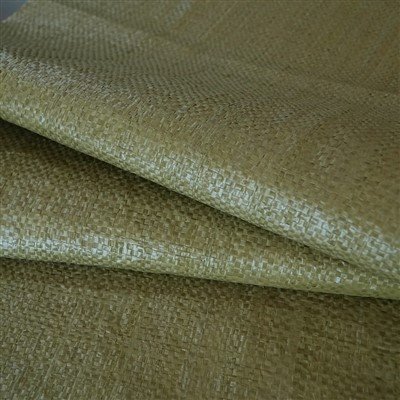
First, let’s start with the basics to get everyone on the same page. General-purpose woven plastic bags are almost exclusively made from two types of polyolefin plastics: high-density polyethylene (HDPE) and linear low-density polyethylene (LLDPE). I know that sounds like a bunch of acronyms, but stick with me. The difference between HDPE and LLDPE is the single biggest factor that drives the density of the bag itself, not just the plastic resin it’s made from. Let’s clarify: resin density is the inherent property of the raw plastic pellets before they’re woven into fabric, while bag density (the number people are actually asking about when they ask for the bag’s density) is the measure of weight per unit area of the finished woven bag. It’s a small but critical distinction—one that’s saved our team from misguiding customers more times than I can count.
Raw resin density is a fixed number for each type. HDPE has a resin density of roughly 0.95 g/cm³, and LLDPE clocks in at around 0.92 g/cm³. That means LLDPE is lighter by nature, which is one reason it’s popular for certain types of bags. But here’s where it gets interesting: when you melt these pellets, extrude them into thin flat films, then weave those films into the sturdy, grid-like fabric that makes up our bags, the final density of the finished bag isn’t just dependent on the resin. It’s also shaped by how we set our manufacturing lines. Things like filament thickness, weave tightness, and whether we add any reinforcements or additives can tweak that number by 10% or more, even if we’re using the exact same resin.
For general-purpose woven bags—think the 25kg or 50kg bags used for grain, animal feed, road salt, and construction materials—we don’t mess around with extreme densities. These bags need to balance strength, cost, and durability, so most of our standard general-purpose bags land in a finished density range of 80 to 120 grams per square meter (gsm). Wait, let me repeat that: grams per square meter. That’s the industry standard for measuring the weight of woven bags, because it lets customers compare apples to apples regardless of bag size. A 50kg feed bag is bigger than a 25kg seed bag, so talking about weight per square meter removes that variable.
But let’s make this concrete, because numbers don’t mean much without context. A standard 50kg general-purpose woven feed bag made with HDPE has a finished density of about 100 gsm. That means a single square meter of that bag’s fabric weighs 100 grams. If you switch to LLDPE, you can get a similar strength at a lower density—around 85 gsm—because LLDPE filaments are more flexible, so you don’t need as much material to hold the same load. But that lower density comes with a tradeoff: LLDPE bags are slightly less resistant to UV damage if they’re going to be stored outdoors, which is why agricultural customers often ask us for HDPE versions for bags that will sit in a farmyard for months at a time.
I learned this tradeoff the hard way early in my career. A few years back, a local chicken farm placed an order for 10,000 LLDPE woven bags for their layer feed, telling us they wanted to cut costs. They opted for the lower-density 85 gsm version, figuring the lower resin cost would make up for the slightly weaker bags. Three months later, they called us in a panic. They’d stored several pallets of bags outside, covered only with a thin tarp that got torn in a storm, and half the bags had developed tiny tears along the seams. The LLDPE’s lower density means thinner filaments, which don’t hold up as well to prolonged sun exposure. We exchanged the bags for HDPE versions at a slightly higher density of 95 gsm, and they’ve been a repeat customer ever since. That story stuck with me because it’s a perfect example of why density isn’t just a number—it’s a choice that ties directly to how the bag will be used.
Another big factor that impacts bag density is whether we add any treatments to the fabric. For general-purpose bags used in extreme conditions—like construction bags for cement or road salt, which need to resist tearing and punctures—we often add a small percentage of polypropylene (PP) to the resin mix. PP has a higher resin density, around 0.90 g/cm³, but it’s much stiffer and more resistant to abrasion. Adding 15% PP to our HDPE resin for construction bags pushes the finished density up to around 110 gsm, but that extra weight is worth it for customers who are stacking 50kg bags 10 high on a pallet. The stiffer filaments don’t stretch as much under load, so the bag keeps its shape and doesn’t tear when being lifted with a forklift.
Wait, I should also address a common misconception I hear all the time: people think a higher density bag is always a better bag. That’s not true. If you’re packaging 25kg of grass seed, a 100 gsm HDPE bag is overkill. It’s heavier, more expensive, and unnecessary for a product that’s dry and non-abrasive. In that case, a lower-density LLDPE bag at 75 gsm is the perfect fit. It’s lighter, uses less material, and holds up just fine to being stacked and shipped. We’ve had customers come to us from other suppliers, complaining that their previous bags were too flimsy, only to realize the other supplier had given them a bag with the wrong density for their product. One nursery owner switched 100% to our 80 gsm LLDPE bags for their potting soil bags, and told us they saved $12,000 a year on packaging costs because they weren’t overpaying for denser, unnecessary bags.
Let’s also talk about how we test these densities, because as a supplier, we don’t just pull numbers out of thin air. Every batch of woven plastic bags we ship goes through a rigorous quality check to confirm its density. The process is straightforward, but it’s exact. We take three 10×10 centimeter samples from different parts of the bag (to avoid any variation from the cut edges), weigh each sample on a precision scale, then calculate the weight per square meter. We also test tensile strength—how much force it takes to pull the bag fabric apart—to make sure the density matches the performance our customer needs. For general-purpose bags, our quality standard is that density can’t vary more than 5% from the stated number. If a bag is supposed to be 100 gsm, it can’t be 95 or 105, because that would mean too much variation in strength.
Now, let’s get to the question I get from customers who are trying to spec the right bag for their product. How do you pick the right density for a general-purpose woven plastic bag? The answer depends on three main factors: what you’re packaging, how you’ll use the bag, and how long it will be stored. If you’re packing dry, non-abrasive goods like seed, fertilizer, or pet food, a density between 80 and 90 gsm works. For heavier, more abrasive goods like cement or construction aggregates, you’ll want a density between 100 and 120 gsm, with a PP additive if the bag will be exposed to rough handling. If your bags will be stored outdoors for more than a month, you’ll want to go with a slightly denser HDPE version over a lower-density LLDPE, to avoid UV damage.
I should also mention that sustainability is playing a bigger role in how we set densities these days. A lot of customers come to us asking for lighter bags, not just to cut costs, but to reduce their carbon footprint. The plastic industry has come a long way in the last five years, and we can now manufacture lower-density bags that are just as strong as higher-density ones, using advanced weaving techniques and better resin blends. We’ve even started offering “lightweight general-purpose bags” that are 10-15% lighter than our standard versions, with the same load capacity, by tweaking the weave pattern to be tighter and more uniform. These bags are perfect for customers who want to reduce their packaging waste without sacrificing durability.
Over the years, I’ve seen so many customers make bad choices because they didn’t understand how density impacts their bags. One small grain cooperative came to us three years ago, saying their bags were constantly bursting during harvest season, when they were handling 50kg bags of wheat in a hurry. They’d bought the cheapest bags they could find, which turned out to be 70 gsm LLDPE bags—way too thin for the heavy, slightly abrasive grain. We worked with them to spec a 95 gsm HDPE bag with a reinforced seam, and the number of burst bags dropped by 90% that harvest season. That’s the value of getting density right: it’s not just a number on a spec sheet, it directly impacts your operational costs, product safety, and customer satisfaction.
If you’re still reading this, you’re probably someone who works with these bags every day, or someone who’s trying to figure out what kind of bag you need for your product. Let’s be clear: there’s no universal density for general-purpose woven plastic bags. The range is 75 to 120 gsm, with most standard bags falling between 80 and 100 gsm, but that range shifts based on the resin, weave, and treatments we use. The key is to work with a supplier who can tailor that density to your specific needs, not just sell you a one-size-fits-all bag.
As a supplier who’s been in this business for over a decade, I can tell you that the best general-purpose woven bags aren’t the densest ones—they’re the right density for what you’re packaging. Too dense, and you’re wasting money on unnecessary material that adds weight to your shipment and increases your carbon footprint. Too thin, and you’re dealing with burst bags, wasted product, and frustrated customers. That’s why we spend so much time talking to each of our customers, learning what they’re packaging, how they’re storing and handling their bags, and what their budget is, before we even suggest a density.
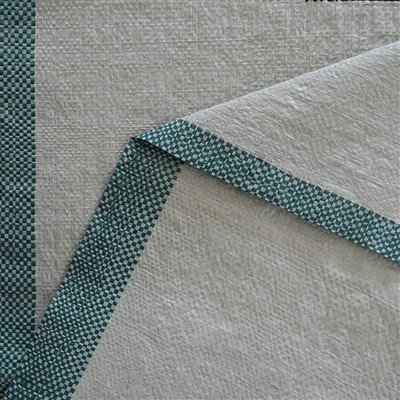
If you’re in the market for general-purpose woven plastic bags and you want a solution that’s tailored to your needs, don’t hesitate to reach out. We don’t do generic bags or cookie-cutter solutions—we work with you to find the right density, resin, and features that fit your product and operations. Whether you’re a small farm needing 1,000 bags for feed, a construction company needing 50,000 bags for road salt, or a nursery needing lightweight bags for potting soil, we can help you get the right bag at the right density, at a price that makes sense for your business. Don’t settle for bags that are too thin, too dense, or just wrong for your needs. Let’s talk about what you’re packaging, and we’ll find the perfect density for your general-purpose woven plastic bags.
General-Purpose Woven Plastic Bags References
- Plastic Packaging Association. (2021). Woven Polypropylene and Polyethylene Bags: Material Properties and Performance Standards.
- American Society for Testing and Materials (ASTM). (2020). Standard Test Methods for Measuring the Density of Plastic Films and Sheeting (D1505).
- European Plastic Converters Association. (2022). General-Purpose Woven Packaging: Density Ranges and Application Guidelines.
- National Agricultural Packaging Council. (2021). Agricultural Woven Bag Best Practices: Strength, Density, and Durability.
Jining Shunxing Plastics Co., Ltd.
Jining Shunxing Plastics Co., Ltd. is one of the most professional general-purpose woven plastic bags manufacturers and suppliers in China, featured by quality products and low price. Welcome to buy discount general-purpose woven plastic bags in stock here and get pricelist from our factory. We also accept customized orders.
Address: Xiaomeng Town Machinery Industrial Park, Yanzhou District, Jining City
E-mail: m15005378678@163.com
WebSite: https://www.sxwovenbag.com/
