If you’ve ever stood in a power substation on a crisp morning, watching the hum of high-voltage equipment carry electricity across hundreds of miles to homes, hospitals, and factories, you might not think about the quiet safeguards keeping that entire system safe. As someone who’s spent the last 12 years designing and supplying high-voltage switchgear—first as an engineer on the factory floor, now as part of the sales team talking to utility operators and industrial plant managers—let me tell you: those safeguards aren’t an afterthought. They’re the reason a substation doesn’t become a hazard, and they’re what make our switchgear the backbone of reliable power infrastructure. High-Voltage Switchgear
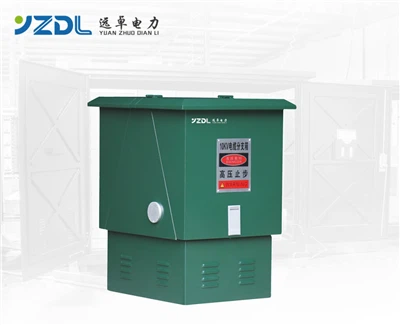
When I first started in this industry back in 2011, I got to shadow a senior technician at a rural substation that had just had a switchgear upgrade. He pointed to a gray metal cabinet about the size of a small truck and said, “That thing can handle 138,000 volts, but if it didn’t have those little red interlocks on the front doors, one wrong move could kill a person before they even see the spark.” I didn’t fully grasp how integral those small features were until we had a close call at our factory: a new hire, rushing to fix a minor wiring issue, bypassed an interlock on a test unit, and triggered a fault that sent a 50,000-volt arc flash across the work bay. No one was hurt, but it was a wake-up call that every safety feature we build isn’t just code—it’s a lifeline.
Let’s break down the safety features we build into every piece of high-voltage switchgear, from the 12kV units for commercial facilities to the 550kV units for transmission grids, and why they matter for anyone relying on power that never goes out.
First up, arc flash and arc blast mitigation. Arc flashes are the single biggest risk with high-voltage equipment: they’re intense bursts of light and heat that can reach 35,000°F in a fraction of a second, hot enough to melt copper and vaporize bone, and arc blasts are the pressure waves that can crush concrete and throw metal panels. Our switchgear uses two key solutions here. The first is pressure-relief ventilation panels. These are reinforced, thin metal panels built into the top and sides of the switchgear enclosure. If an internal fault creates excess pressure, the panels rupture outward in a controlled direction, not toward the front where operators stand. We test every unit to make sure these panels only open when there’s a real fault, not during normal operation—we’ve had clients tell us these panels saved their lives, and that’s the metric we care about more than any efficiency rating. The second arc mitigation feature is arc-resistant construction. Our switchgear enclosures are bolted with high-tensile steel, and we seal every joint and cable entry point to contain an arc within the enclosure. Some of our newer models even use internal gas detectors that trip the circuit breaker in less than 2 milliseconds if they sense a rising arc, cutting off the fault before it can spread.
Next, interlock systems—these are the unsung heroes of switchgear safety, and the ones that the 2011 technician kept talking about. Interlocks are mechanical or electrical devices that prevent operators from doing dangerous things, like opening a live door or closing the wrong switch. We make three types of interlocks standard on all our units, no extra cost. Mechanical interlocks are the physical ones, like the red bars on the substation cabinet I saw back in 2011: you can’t open the front door of the switchgear unless the circuit is fully disconnected from the power source, and you can’t close a circuit if any door or panel is open. We also have electrical interlocks, which tie into the switchgear’s control system: if there’s a ground fault detected on the line, the electrical interlock won’t let you close the breaker, even if someone tries to force it. The third type is key interlock systems, sometimes called “key interlock traps.” These use special keys that you can only remove when a switch is in a specific position. For example, to open a breaker panel for maintenance, you have to turn the breaker to the “off” and “grounded” position, and only then can you pull the key out of the breaker. That key is required to open the panel door, so you can never accidentally leave a breaker live while working inside. We’ve had a utility in the Midwest tell us they reduced near-misses related to misoperation by 90% after switching to our key interlock system, and that’s the kind of result that makes all the extra design work worth it.
Insulation is another critical safety feature, and it’s not just about the plastic or rubber on wires. High-voltage switchgear has to separate live parts from each other and from the outside environment, and regular wear, dust, moisture, or even animals like squirrels can break down that insulation. We use two main types of insulation in our units: solid insulation and gas insulation. For most distribution switchgear, we use epoxy resin insulation, which is molded around live parts to create a permanent, non-porous barrier that doesn’t break down over time, even in dusty or humid climates. For higher-voltage transmission switchgear, we use sulfur hexafluoride (SF6) gas, which is an excellent insulator that’s 2.5 times more effective than air. SF6 is sealed inside the enclosure, so it never leaks under normal operation, and we add gas pressure monitors that alert operators if the pressure drops too low—low pressure means the insulation is compromised, and the system will trip automatically before a fault can happen. We also test every unit for insulation resistance before it leaves our factory; our quality team runs a 10,000-volt insulation test on every single piece, and if it doesn’t meet our threshold, it gets rebuilt before it even ships.
Grounding systems are non-negotiable for high-voltage equipment, and we build our grounding features to be both reliable and fail-safe. The primary grounding switch is a manual or motorized switch that connects the live circuit to the ground line before maintenance work starts. Our grounding switches have a visible indicator, so operators can actually see when the circuit is grounded—no guessing, no relying on an unread control screen. We also have secondary grounding rods installed at the base of every switchgear unit, in case the main grounding switch fails; these rods create an alternate path for fault current to flow to the earth, preventing the enclosure from becoming energized even if the main system has a fault. One thing a lot of new operators don’t know is that a switchgear enclosure that’s not properly grounded can become energized if there’s a fault, turning a metal cabinet into a lethal shock hazard. We mark all grounding points with bright yellow labels, and every unit comes with a grounding tool that’s sized to fit the switchgear’s terminals—you never want to use a makeshift wrench for grounding, and we make sure our clients have the right tool ready when they install our equipment.
Remote monitoring and control features have changed switchgear safety a lot in the last 10 years, especially as more utilities move to smart grids. We integrate our switchgear with SCADA (Supervisory Control and Data Acquisition) systems, so operators don’t have to be standing next to a substation to check on equipment. Our remote monitoring tracks things like circuit current, voltage, insulation resistance, SF6 gas pressure, and fault history in real time, and it sends instant alerts if anything is out of the normal range. If a fault does happen, operators can trip the breaker remotely, without having to send a technician out to the substation, which reduces their exposure to hazards. We also build our switchgear with built-in fault recording systems, which log every event—when a breaker tripped, what the current was, how long the fault lasted—so technicians can go back and figure out what caused the issue, instead of just replacing parts blindly. For industrial facilities, this is a huge benefit too: a factory shutdown can cost thousands of dollars an hour, so being able to respond to a fault quickly keeps operations running.
I know there are a lot of people out there who think safety features add too much cost to switchgear, or that they overcomplicate things. But let’s be real: the cost of a substation fire, or an operator injury, is way higher than the cost of building safety into every unit. A few years ago, we had a client in Texas that tried to save money by buying lower-cost switchgear that skipped some of the interlock systems. Six months after installation, a technician tried to work on a breaker, bypassed a flimsy interlock, and got injured by an arc flash. They ended up paying millions in medical bills, lost productivity, and legal fees, and they had to replace all the switchgear anyway. That’s the last thing anyone wants, and it’s exactly why we build every safety feature standard, no shortcuts.
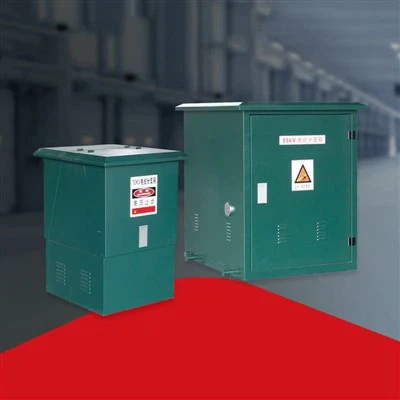
If you’re a utility operator, industrial plant manager, or maintenance supervisor looking for switchgear that doesn’t cut corners on safety, I’d love to walk you through our products, show you test data, or answer any questions you have about how our systems keep your team and your equipment safe. Every facility is different—whether you need a small unit for a commercial building, or a large transmission unit for a power grid—we can tailor our switchgear to fit your needs without compromising on the safety features that matter most. Don’t hesitate to reach out to start a conversation about your next project.
Low-Voltage Switchgear References
- American National Standards Institute. (2020). ANSI C37.20.1: Switchgear and Controlgear for Rated Voltages Above 1000 V. ANSI.
- Institute of Electrical and Electronics Engineers. (2018). IEEE C37.20.7: Guide for Testing Arc Resistance of High-Voltage Switchgear and Controlgear Assemblies. IEEE.
- International Electrotechnical Commission. (2021). IEC 62271-200: High-Voltage Switchgear and Controlgear – Part 200: AC Metal-Enclosed Switchgear for Rated Voltages Above 1 kV and Up to and Including 52 kV. IEC.
- U.S. Department of Energy. (2019). Safety Guidelines for High-Voltage Substation Equipment. DOE Office of Electricity Delivery and Energy Reliability.
Yuanzhuo Electrical Equipment (Jiangsu) Co., Ltd.
We’re well-known as one of the leading high-voltage switchgear manufacturers and suppliers in China. We warmly welcome you to wholesale high quality high-voltage switchgear at competitive price from our factory. If you have any enquiry about cooperation, please feel free to email us.
Address: Group 8, Chengdong Village, Fucheng Sub-district Office, Funing County
E-mail: markcheng1358@126.com
WebSite: https://www.yzdlchina.com/
