Hey there! I’m a supplier of gimbal and turret structural parts, and I’ve been getting a lot of questions lately about whether these parts can be used in automotive applications. So, I thought I’d sit down and write this blog to share my thoughts and insights on the topic. Gimbal & Turret Structural Parts
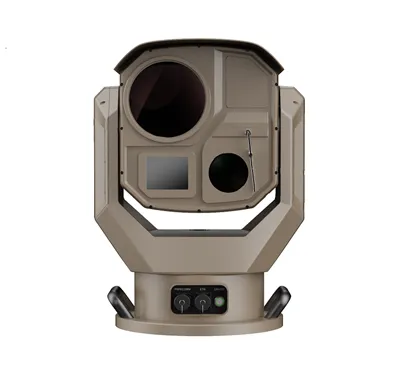
Let’s start with a bit of background on gimbal and turret structural parts. Gimbals are mechanisms that allow an object to rotate around one or more axes while remaining stable. They’re commonly used in cameras, drones, and even some military equipment to keep the sensor or weapon steady. Turrets, on the other hand, are structures that house and support rotating components, often used in military and industrial settings to provide a stable platform for weapons or sensors.
The structural parts for gimbals and turrets are designed to be strong, lightweight, and precise. They’re typically made from high – quality materials like aluminum alloys, carbon fiber composites, or steel, depending on the specific requirements of the application. These parts have to withstand a lot of stress and movement while maintaining their accuracy.
Now, let’s think about automotive applications. In the automotive world, there are plenty of scenarios where stability, precision movement, and strength are crucial. One obvious area is in autonomous vehicles. These cars rely on a whole bunch of sensors, like LiDAR, cameras, and radar, to navigate the roads. Just like in a camera or a drone, these sensors need to be kept stable and pointed in the right direction.
Gimbal structural parts could be used to mount these sensors on the vehicle. For example, a gimbal could allow a LiDAR sensor to rotate smoothly and accurately, scanning the surrounding environment without any vibrations or jerks. This would improve the quality of the data collected by the sensor, which is essential for the vehicle’s decision – making algorithms.
Another aspect is electric and hybrid vehicles. These cars have a lot of high – tech components, and some of them might need to be adjusted or positioned precisely. For instance, the battery management system might require sensors to be placed at specific angles to monitor the battery’s temperature and state of charge accurately. Turret – like structures could be used to house and position these sensors in a stable and adjustable way.
In the area of automotive safety, gimbal and turret parts could also play a role. Advanced driver – assistance systems (ADAS) use sensors to detect obstacles, lane markings, and other vehicles. A well – designed gimbal could help these sensors maintain a clear view, even when the vehicle is going over bumps or making sharp turns. This would enhance the effectiveness of the ADAS and ultimately make driving safer.
But, of course, there are some challenges to using gimbal and turret structural parts in automotive applications. One of the biggest issues is cost. The materials and manufacturing processes used to make high – quality gimbal and turret parts can be expensive. In the automotive industry, where cost – effectiveness is a major concern, finding a balance between quality and price is crucial.
Another challenge is the harsh automotive environment. Cars have to deal with extreme temperatures, vibrations, and exposure to dirt, water, and chemicals. The gimbal and turret parts need to be designed to withstand these conditions without losing their performance. Coating the parts with protective materials and using seals to keep out contaminants are some of the ways to address this issue.
There’s also the matter of size and weight. In the automotive world, every ounce counts. The parts need to be compact and lightweight to avoid adding unnecessary bulk to the vehicle, which could affect its fuel efficiency and handling.
Despite these challenges, I really believe that there’s a lot of potential for gimbal and turret structural parts in automotive applications. As the automotive industry continues to evolve, with the rise of autonomous and electric vehicles, the demand for high – precision and stable components is only going to increase.
If you’re in the automotive industry and you’re looking for innovative solutions for sensor mounting, component positioning, or other applications where precision and stability are key, I’d love to talk to you. I’ve got a team of experts who can work with you to design and manufacture custom – made gimbal and turret structural parts that meet your specific requirements. Whether you need a small batch for prototyping or a large – scale production run, we’ve got the capabilities to deliver.
So, if you’re interested in learning more about how our gimbal and turret structural parts could benefit your automotive projects, don’t hesitate to reach out. Let’s have a chat and see if we can come up with a solution that works for you. We’re always excited to be part of the next big thing in the automotive industry!
Optical Components References:
- "Automotive Sensors: Technology, Trends and Applications" by various authors.
- "Advanced Materials for Automotive Applications" research papers published in automotive engineering journals.
- Industry reports on the development of autonomous and electric vehicles.
Xi’an Zhongke Lead Ir-Tech Co., Ltd.
We are one of the most experienced gimbal & turret structural parts manufacturers in China, specialized in providing high quality OEM products with the industrial grade. We warmly welcome you to wholesale high performance gimbal & turret structural parts at an affordable price from our factory.
Address: Building 8,Hard Technology Enterprise Community No.3000,Biyuan 2nd Rd,High-Tech Zone Xi’an,Shaanxi,China
E-mail: sales@lead-ir.com
WebSite: https://www.leadinfrared.com/
