Hey there, if you’re reading this, chances are you’ve dealt with a wonky right angle bevel gear reduction motor—you know the kind: one that cuts out mid-operation, makes way too much noise, or just doesn’t hold up when you need it to work reliably day in and day out. As someone who’s been in the business supplying these motors for over 15 years, I’ve seen it all. I’ve fielded calls from warehouse managers whose conveyor motors fried on a Saturday night, from packaging line owners tired of replacing bevel gears every three months, and even from a robotics engineer who swore his prototype failed because of a sketchy gear reducer we’d tweaked early on. The good news? Most reliability issues aren’t because the motor is “bad”—they’re because of small, preventable missteps in how you spec, install, maintain, or even operate it. Let’s break this down like we’d chat over a coffee, no stuffy jargon, just real stuff that actually works. Right Angle Bevel Gear Reduction Motor

First off, let’s start with the spec phase—this is where 70% of reliability problems start, trust me. I can’t tell you how many times a customer comes to me and says “I need a 1HP right angle bevel motor for my conveyor” without giving the full story. They forget to mention the load’s starting torque, how often the machine runs, the ambient temp in their warehouse, or if it’s going to be outside in the rain or near food processing chemicals. Bevel gears in these motors rely on precise tooth engagement to transfer torque smoothly. If you undersize the motor (or the gear reducer, which is part of the whole system), those teeth get overloaded every time the machine starts up, leading to pitting, chipping, or even cracking over time. A lot of guys go for the cheapest option to save a buck, but that’s a false economy. For example, a food packaging customer of mine tried a generic “fit-for-all” right angle bevel motor because it was $200 cheaper, and within six months, the bevel gears were worn so bad the motor would skip gears when running at full speed. We swapped it for a properly spec’d motor with a 25% torque buffer (our standard now, which I recommend to every customer) and they haven’t had an issue in three years. Oh, and pay attention to the gear ratio mismatch—running the motor at the edge of its rated RPM range (too high or too low) puts unnecessary stress on the bevel gear set. I see this a lot with conveyor systems that use variable frequency drives (VFDs) without adjusting the ratio to match the actual operating speed.
Next, installation—this is another big one that’s often overlooked. I’ve had customers send back motors “DOA” (dead on arrival) that were actually damaged during install, not because the motor was faulty. Right angle bevel gear motors are unique because of their 90-degree angle, so alignment is way more critical than with inline motors. If you mount the motor to the load with even a tiny angular or parallel misalignment, that creates side forces on the bevel gears and the motor shaft, leading to premature bearing wear and gear damage. A few years back, a manufacturing plant installed ten of our motors for their assembly line, but their maintenance team used a rough eye instead of a dial indicator to align them. Within three months, four of the motors were making a grinding noise and had to be replaced. We went out to walk them through the proper alignment steps, and the next set they installed using the dial indicator method have run flawlessly ever since. Also, don’t skip the mounting surface—make sure it’s flat, rigid, and free of debris or rust. If the mount bends or vibrates, that misalignment will get worse over time, and you’ll end up with a whole host of issues, from seal leaks to gear failure. Another install pro tip: don’t overtighten the shaft couplings or input/output flanges. Over-tightening can warp the motor housing or damage the bevel gear teeth right at installation, which might not show up for weeks but will kill reliability fast.
Now, let’s talk about the maintenance side—this is where a lot of facilities drop the ball. Most people think “if it’s not broken, don’t fix it” when it comes to these motors, but that’s a recipe for disaster. For right angle bevel gear motors, the lubrication is non-negotiable. The bevel gears run in oil or grease, and if that lubricant gets old, contaminated, or is the wrong type, it’s like running your car without oil. A common mistake is using standard gear oil for all motors, but right angle designs have different heat and pressure levels on the gears, so you need a specialized gear oil with extreme pressure (EP) additives. Our motors come pre-filled with the correct EP grease or oil, but a lot of customers drain it and replace it with whatever’s on hand, which leads to rapid wear. How often should you change it? For indoor, light-duty applications, every 12,000 hours or annually—whichever comes first. For heavy-duty, outdoor, or dusty environments, cut that in half, every 6,000 hours. Also, check the lubricant regularly for contamination: metal shavings (a sign of gear wear), water (from condensation if it’s outdoor), or dirt (from a dusty factory). If you see any of that, change it immediately and investigate why it got in—maybe a seal is failing. Another maintenance step: check the seals on a monthly basis. Right angle motors have shaft seals at the input and output, and if those leak, lubricant escapes, or contaminants get in, leading to gear and bearing damage. Replace seals every 2-3 years, even if they look fine—rubber seals degrade over time, especially if exposed to heat or chemicals. Oh, and don’t forget the bearings! I’ve seen bearings fail because they were never greased—many of our motors have grease fittings for the drive and pinion bearings, so use a grease gun every 3-6 months (adjust based on operating conditions) to keep them lubricated.
Then there’s operation—how you use the motor day-to-day affects its reliability more than you might think. A lot of operators push the motor beyond its limits, either by overloading the machine or running it 24/7 without downtime. For example, a customer that runs a printing plant had their right angle bevel motors for the feed system running non-stop for two years straight. They never turned them off, never let them cool down, and eventually the internal components wore out because of constant heat buildup. We recommended scheduling 15-minute cool-down breaks every 8 hours, and upgrading to a motor with better heat dissipation (our heavy-duty line, which we suggest for continuous operation) and they’ve cut failure rates by 80%. Also, avoid frequent start-stop cycles if possible—every time the motor starts, there’s a big torque spike that puts stress on the bevel gears. If your application requires frequent starts, go for a motor with a higher starting torque rating (again, that 25% buffer I mentioned earlier) and make sure the VFD (if you’re using one) is programmed to ramp up and ramp down smoothly, not jump immediately to full speed. One more thing: don’t modify the motor without checking with the supplier. I had a customer who drilled extra holes in the motor housing to mount an extra sensor, and that messed up the internal gear alignment—cost him a new motor and downtime. Always run modifications by the people who built the motor, because we know the design inside and out.
Wait, I should also mention a less obvious thing: environmental factors. Right angle bevel gear motors aren’t one-size-fits-all for every environment. If you’re using them outdoors, exposed to rain, snow, or extreme temperatures, you need a motor with the right IP (Ingress Protection) rating. Our standard motors have IP54, which works for most indoor and lightly exposed outdoor, but if it’s submerged or in a very dusty environment, go for IP65 or higher. For high-temperature environments (like a furnace room or a near a kiln), you need a motor with high-temperature insulation on the windings, otherwise the copper wires will degrade and the motor will fail. For cold environments, lubricant can get thick, so you might need a motor with winter-grade lubricant or a heating element to keep the motor at operating temp before starting. I once had a mining customer who used our standard motors outdoors in Canada in winter; the lubricant got too thick, so the motors couldn’t turn over in the morning, leading to broken gears. We swapped them for cold-weather rated motors and they fixed that issue right away.
Now, let’s talk about common mistakes I see over and over again that people don’t realize. First, mixing and matching parts from different suppliers. A lot of guys will buy the gear reducer from one place and the motor from another, assuming they’re compatible, but bevel gear sets are precision-machined, so if the reducer is from Supplier A and the motor shaft is from Supplier B, the alignment will be off, leading to premature wear. We supply fully integrated right angle bevel gear reduction motors, so everything is matched and tested at the factory—no guesswork there, and that’s a big reliability win. Another mistake: ignoring vibration. If your motor is vibrating more than normal, that’s a warning sign, not just a nuisance. Vibration can come from misalignment, worn bearings, or damaged gears, and if you don’t fix it, it will only get worse. We sell affordable vibration meters for our customers, and I tell them to check vibration levels monthly—if it’s above the rated threshold, investigate immediately.
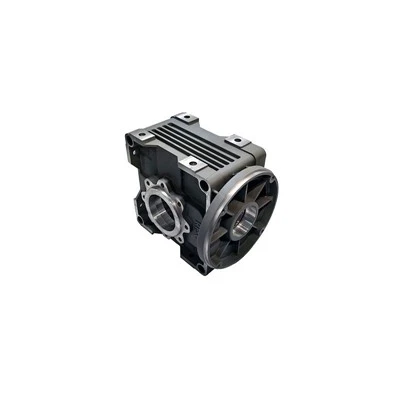
At the end of the day, improving the reliability of a right angle bevel gear reduction motor isn’t rocket science—it’s about paying attention to the small details that most people skip. It’s about spec’ing the right motor for your actual application, installing it correctly, maintaining it regularly, operating it within its limits, and accounting for your environment. I’ve seen customers go from monthly motor failures to running their motors for 10+ years just by making these small changes. If you’re dealing with motor reliability issues, or you want to make sure your next motor setup is as reliable as possible, feel free to reach out and chat—we can work through your specific application, help you spec the right motor, and give you customized tips for maintaining it. No hard sell, just a fellow supplier who’s been in the trenches and wants to help you avoid the headaches.
R Series Helical Gear Motors Now, for the references:
- Shigley, J. E., & Mischke, C. R. (2004). Standard Handbook of Machine Design (3rd ed.). McGraw-Hill.
- American Gear Manufacturers Association (AGMA). (2018). AGMA 2001-D04: Fundamental Rating Factors and Calculation Methods for Involute Spur and Helical Gear Teeth.
- International Electrotechnical Commission (IEC). (2020). IEC 60034-1: Rotating Electrical Machines – Part 1: Rating and Performance.
- Bhateja, G. K. (2019). Failure Analysis and Prevention of Mechanical Components. CRC Press.
- Jones, F. D. (2021). Practical Guide to Electric Motor Installation and Maintenance (2nd ed.). Industrial Press Inc.
GuangDong Ruisico Transmission Technology Co., Ltd.
Guangdong Ruisico Transmission Technology Co., Ltd. is one of the most reliable right angle bevel gear reduction motor manufacturers and suppliers in China, also supports customized service. Welcome to buy durable right angle bevel gear reduction motor made in China here and get quotation from our factory. For price consultation, contact us.
Address: No. 70, Anjing Road, Shengfeng Community, Xiaolan Town, Zhongshan City
E-mail: info@risc-drive.com
WebSite: https://www.risc-motor.com/
