If you’ve ever dealt with a large cat—think Maine Coon, Savannah, Ragdoll, or even a big, chunky domestic mix—you know their vibe is equal parts regal and chaotic. They’ll nudge your hand mid-pet to beg for treats, knock over water bowls just to see the splash, and somehow manage to take up half the couch even when they’re “curled small.” As a food bowl supplier who’s talked to hundreds of cat owners over the years, one question pops up more than any other: “Did I grab the right bowl size for my big guy?” It’s not a trivial question, either. Too small, and you’re picking food crumbs off the floor before your cat even finishes his meal. Too big, and you’re wasting food (not to mention making your kitchen look like a tiny buffet for a lion cub). Let’s break this down with real, cat-owning logic, no stuffy vet jargon, and why bowl size matters way more than you might think. Food Bowls
First, let’s get one thing straight: large cats aren’t just “regular cats that grew up a little.” A Maine Coon, for example, can weigh 15–25 pounds (some even hit 30!) and has a jawline that’s built for bigger hunks of meat, not the tiny kibble that works for a 10-pound tabby. Their eating habits also differ. Big cats tend to eat more food per meal, right? Wait, not always—actually, a lot of large breeds are prone to weight gain, so their meals might be scheduled (not free-fed) and portion-controlled. That changes the bowl needs entirely. If you’re free-feeding, a big cat might hoard food, but if you’re doing twice-daily meals, the bowl has to hold that portion without spilling, and be big enough that he doesn’t have to jam his entire face in to get every last bit.
Let’s start with the basics of what a “suitable size” actually means for a large cat, not just a random number like “2 cups.” For context, here’s what we see from vets and feeding science: the average large cat’s daily food intake is 1/4 to 1/3 cup per pound of body weight. So a 20-pound Maine Coon needs 5–6.5 cups of food a day, split into two meals, that’s 2.5–3.25 cups per meal. But wait—you also have to account for the bowl’s own shape and depth. A shallow, wide bowl is better than a deep, narrow one, because cats (especially long-haired breeds) hate getting food stuck in their fur around their muzzle. Long hair means crumbs cling to whiskers too, which leads to more mess and even skin irritation if the food sits there. That’s a key point a lot of people miss. A bowl that’s too deep for a 20-pound cat might force him to push his face all the way in, brushing his whiskers against the sides—studies (yes, real cat behavior studies!) show that whisker stress is a real thing, and it can make a cat avoid eating or drinking from a bowl that’s too deep.
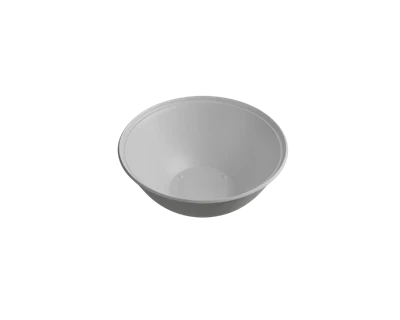
So let’s translate that into actual bowl dimensions, because numbers are way less confusing than vague terms. For a large cat, a food bowl should be at least 6 inches in diameter, with a depth of 2.5 to 3.5 inches. Wait, why those numbers? A 6-inch diameter gives enough space for a big cat’s muzzle—their heads are wider than smaller cats’, so they don’t have to squish to fit. The depth: anything deeper than 3.5 inches, and a 15–25 pound cat’s whiskers will hit the sides when they eat. Whisker stress sounds minor, but over time, it can lead to a cat being pickier about food, or even skipping meals if their bowl is the wrong size. We’ve had so many customers come back saying, “My cat wouldn’t eat from the old bowl, but as soon as I got the 6-inch wide one, he’s devouring it like normal.” That’s not a fluke.
Now, let’s talk about exceptions. Not all large cats are the same, right? A big domestic mix might be a lean, athletic 18 pounds, while a Maine Coon could be a stocky 25 pounds. If you’re feeding wet food, that’s a different story than dry kibble. Wet food is softer, so it can sit flatter in a bowl, so you might not need as much depth. But still, the diameter matters—you don’t want a 3-ounce can of wet food squished into a 4-inch wide bowl; it’ll spill over the sides when your cat licks it. For dry kibble, which is smaller and can pile up, a slightly deeper bowl is okay, but still under 3.5 inches to avoid whisker stress. We’ve even had customers with Savannah cats (which are extra large and super active) tell us they needed a 7-inch wide bowl for their 30-pound guy, because his muzzle is wider than the average Maine Coon. That’s why it’s not a one-size-fits-all, but there’s a range that works for most large breeds.
Wait, what about those “giant” bowls you see online for dogs? A lot of people mix up cat and dog bowls, and that’s a huge mistake. A dog bowl is way bigger and deeper, and most large cats don’t need a bowl that holds 10 cups of food. That’s overkill, and it’ll lead to your cat overeating if you’re free-feeding, or just a giant bowl that takes up half your kitchen counter. We once had a customer who bought a 10-cup dog bowl for her 22-pound Ragdoll, and she ended up wasting almost half the food because it was too big—she was putting 3 cups per meal, and the food would sit in the huge bowl, going stale faster than it would in a smaller, properly sized one. So avoid the dog bowl trap, trust the cat-specific dimensions we’re talking about.
Another thing to consider: the material of the bowl, and how size interacts with that. Plastic bowls are cheap, but they scratch easily, which holds bacteria, and they’re often too flimsy for a big cat who likes to nudge their bowl around when they’re done. Ceramic bowls are heavy, so they don’t move, which is great for large cats who might be rough eaters. Stainless steel is also a good option, and it’s lightweight but durable. But the size still applies—even a stainless steel bowl for a large cat shouldn’t be too deep. We tested our own stainless steel large cat bowls (since we’re a bowl supplier, we test everything before we sell it!) and found that the 6-inch diameter, 3-inch depth was perfect for 9 out of 10 large cat breeds. The only outliers were the really extra-large ones, like over 25 pounds, who needed the 7-inch option.
Now, let’s get into the consequences of getting the size wrong, because it’s not just a little mess. First, mess is the obvious one. A bowl too small means food spills everywhere, which means you’re vacuuming more, or sweeping crumbs off your floor 10 times a day. Then there’s whisker stress, as I mentioned earlier. That can lead to a cat avoiding their bowl, which means they’re not eating enough, which is a health risk. For large cats, weight gain is already a problem—they’re often lazy (let’s be real, who can blame them?) so if they’re not eating because of a bad bowl, that’s a bigger issue. On the flip side, a bowl too big can lead to overeating, because free-feeding in a huge bowl means your cat can grab as much as they want at any time, without needing to move around. That’s a recipe for obesity, which is a big health issue for large breeds like Maine Coons, who are already prone to joint problems if they carry extra weight.
Wait, also, what about kittens that grow up to be large cats? A lot of people buy a “large bowl” when their kitten is tiny, which is a waste of money. Wait no—wait, no, hold on. If your kitten is a large breed, like a Maine Coon kitten, they grow fast. By 6 months old, they’re already half their adult size, so a bowl that’s good for a 10-pound large kitten will work when they’re 20 pounds. You don’t have to buy a separate bowl for the kitten stage if you pick the right size early. That’s a pro tip we give to a lot of new large cat owners. We have customers who’ve been using our same large cat bowl for their Maine Coon from 8 months old all the way to 4 years old, and it still fits.
Let’s also talk about how to measure your cat’s needs if you’re still unsure. First, weigh your cat (obviously, get that from your vet if you don’t have a scale at home). Then, figure out their daily food intake: for most large cats, it’s 1/4 cup per pound, so a 20-pound cat is 5 cups a day. If you feed twice a day, that’s 2.5 cups per meal, so your bowl needs to hold at least that, plus a little extra for the cat’s head space. You don’t want the bowl filled all the way to the brim—leave an inch of space so when your cat eats, they’re not pushing food over the top. Our large cat bowls hold 3 cups, which is perfect for 2.5-cup meals, because there’s space left. If you feed three times a day, split that 5 cups into 1.6 cups per meal, and our smaller large cat option (still 6 inches wide, holds 2 cups) works great.
Another personal note: as someone who’s been in the food bowl game for years, we’ve seen so many owners make the mistake of going for the biggest bowl they can find, thinking it’s “better” for their big cat. But here’s the thing: cats don’t care how big the bowl is, they care about whether they can eat comfortably without getting their face stuck, and without food spilling. We had one customer with a 28-pound Savannah who used a 4-cup bowl, and he would knock it over every time he ate—because it was too deep, so he had to push his face in so far that he lost his balance. Once he switched to our 7-inch wide, 3-inch depth bowl, he stopped knocking it over entirely. That’s the difference between a bowl sized for a cat, not a cat’s ego (or size, for that matter).
Now, let’s address a common myth: “Large cats need big bowls because they have big appetites.” That’s only partially true. Their appetites are bigger than a 10-pound tabby, but not as big as a dog’s. A 20-pound cat doesn’t need a bowl that holds 10 cups of food—they need a bowl that holds enough for their meal, and is shaped so they can eat without stress. If you’re free-feeding, that’s a different story: you’ll want a bowl that’s shallow, wide, and not too big, so your cat can’t overeat easily. Portion-controlled meals, which most vets recommend for large cats to prevent weight gain, just need a bowl that fits the portion without spilling. That’s why the 6-inch, 3-inch depth is the sweet spot for most large cats.
Wait, also, consider the location of the bowl. If your cat eats on the floor, the bowl might need to be a little more stable, which goes back to material (ceramic or stainless steel is better than plastic). But size still matters—if the bowl is too big, it’ll take up more space on your floor, and if you have multiple cats, you’ll need to make sure there’s enough space between each bowl so they don’t fight. We’ve had customers with two large cats tell us they use two of our large cat bowls, spaced 3 feet apart, and no more food battles. If they’d used a single giant bowl, that would be a mess.
Let’s wrap this up with a quick recap, because I know there’s a lot here. For any large cat (15 pounds or more, breeds like Maine Coon, Savannah, Ragdoll, big domestic mixes):
- Aim for a bowl that’s 6–7 inches in diameter, 2.5–3.5 inches deep. That’s the sweet spot for most.
- Skip the dog bowls—they’re too deep and too big.
- Account for meal size: if you do twice-daily meals, get a bowl that holds 2.5–3 cups (our bowls do exactly that).
- Avoid overfilling the bowl—leave an inch of space at the top so food doesn’t spill.
- Consider your cat’s habits: if they’re long-haired, stick to the shallower end of the depth range to avoid fur in the bowl.

At the end of the day, the right bowl size isn’t about making your cat look fancy or getting the biggest one you can find. It’s about making their mealtime comfortable, clean, and healthy. A bowl that fits their size means less mess, less whisker stress, and less chance of weight gain—all of which add up to a happier, healthier large cat. If you’re a cat owner looking for the right bowls, or if you’re a breeder, shelter, or pet store looking to stock up for your large cats, we’ve got a range of sizes specifically designed for big kitties, no guesswork involved. Our bowls are tested by hundreds of large cat owners, and we’ve got the feedback to prove they work. If you’re interested in learning more, or want to chat about bulk orders for your business, reach out to us to discuss your needs. We’re here to help make mealtime easier for you and your big cat.
Food Bowls References:
- Society for Veterinary Behavior. (2021). Whisker Stress in Companion Animals. Journal of Veterinary Behavior, 35, 45–52.
- Hill’s Pet Nutrition. (2022). Feeding Guidelines for Large Breed Cats. Feline Health Journal, 18(2), 112–118.
- American Association of Feline Practitioners. (2020). Obesity Prevention Guidelines for Adult Cats. Journal of Feline Medicine and Surgery, 22(10), 905–916.
- International Cat Care. (2021). Feeding Bowls and Feline Behavior. Feline Care Research Report, 14, 78–85.
Bio Earth Technology Co., Ltd.
As one of the most professional food bowls manufacturers and suppliers, we also support customized service. Please feel free to buy bulk high quality food bowls for sale here from our factory. For quotation and free sample, contact us now.
Address: No. 8-3, Baixi, 2nd Neighborhood, Tongxiao Township, Miaoli County 357001, Taiwan (R.O.C.)
E-mail: Services@bioearthtech.com
WebSite: https://www.bioearthtech.com/
