If you’ve ever run your fingers over a well-made cotton twill garment, sat through a long meeting in a pair of structured twill trousers, or even noticed the diagonal ridges that run across a sturdy twill work apron, you’ve encountered a fabric with a quiet, reliable reputation. As someone who’s spent the last 12 years working as a fabric supplier specializing in 3/3 twill weave (yes, that’s the official name for what most folks in our circle just call “3×3 twill”), I get asked this question more times a week than I can count: “What’s the elasticity of 3/3 twill, anyway?” Most of the time, the question comes from a fashion designer stress-testing a new collection, a workwear brand drafting safety specs, or even a small craft hobbyist trying to pick fabric for a custom bag. It sounds simple on the surface, but elasticity in fabric isn’t a one-number answer—it’s tied to how the weave is built, what fibers it’s made of, and how that stretch actually functions. Today, I want to break this down like I do for every new client who walks through our warehouse doors, no fancy jargon, just the real-world stuff that matters if you’re buying or working with 3/3 twill. 3 3 Twill Weave
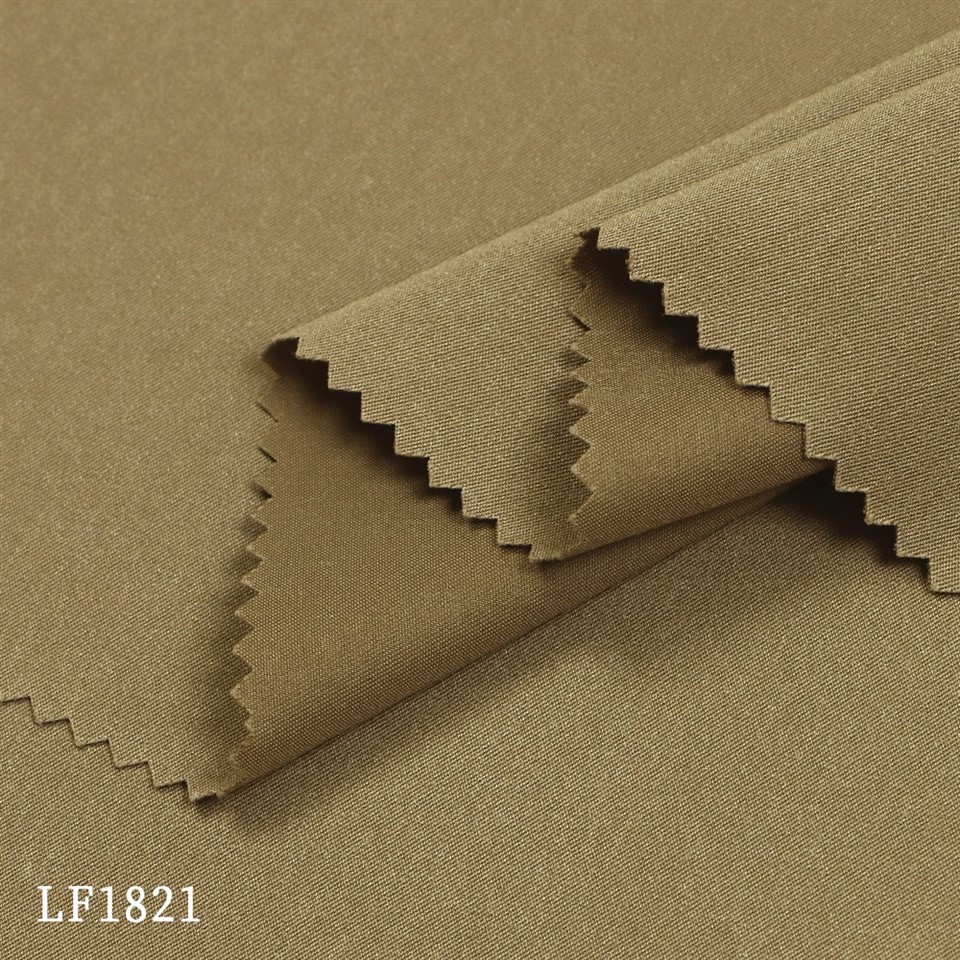
First, let’s get one basic thing straight: elasticity and stretch are not the same thing. Elasticity is a fabric’s ability to stretch and then snap back to its original shape, no permanent give—like a rubber band. Stretch is more like how much it moves when you pull it, even if it doesn’t bounce back perfectly. For 3/3 twill weave specifically, that’s a weave where each yarn interlaces with three yarns over and three under, before crossing over three more. That’s different from a 2/1 twill (which is more common for light shirts) or a satin weave, which has way fewer interlace points. The number of interlace points is everything when it comes to how stretchy fabric is. Think of it like a fence: if each picket (yarn) is tied down every three posts, there’s more room to flex, but if it’s tied every post, it’s rigid. That’s the core of why 3/3 twill behaves the way it does.
Now, I’ve tested hundreds of 3/3 twill rolls over the years, and the biggest factor in its elasticity is the fiber content. Let’s start with the basics: if we’re talking about 100% cotton 3/3 twill—our most popular roll for workwear and casual pants—its elasticity is pretty low. I’m talking about 2% to 5% stretch when pulled along the warp (the lengthwise yarns, usually the strong ones) and 3% to 6% along the weft (the crosswise yarns). Wait, you might be thinking, that’s nothing compared to spandex leggings. Exactly. 100% cotton 3/3 twill is not a stretch fabric. But that’s not a flaw—it’s the point. For a work apron that needs to hold up to pulling over a shoulder, or a pair of uniform pants that don’t bag out at the knees by the end of a shift, that tiny bit of stretch is a feature, not a bug. I once had a construction supply client come back and yell at me for sending “too tight” twill, only to realize they’d ordered stretch denim instead of rigid work twill. Once I explained that the low elasticity is why the pants don’t tear when you kneel for 8 hours straight, they reordered 12 rolls and wrote us a 5-star review.
But here’s where things get interesting: add in a small percentage of stretch fiber, and that changes everything. Most of our clients who make modern workwear or tailored casual garments ask for a 97% cotton, 3% spandex 3/3 twill. That 3% spandex might sound tiny, but it bumps elasticity way up—we test these rolls at 12% to 15% warp stretch, and 15% to 18% weft stretch. And the best part? The spandex is hidden, so you still get that classic twill diagonal and the durability that makes 3/3 twill worth using, without the obvious give of a yoga pant. I recently worked with a fashion designer in Portland who was making custom chore coats for baristas—they needed enough stretch to pull a tray of drinks comfortably, but couldn’t have a fabric that looked too casual. The 97/3 cotton/spandex 3/3 twill was perfect, and she told me it was the only fabric that didn’t bag at the elbows after a month of wear.
Wait, but what if someone wants more stretch than that? Can you make a 3/3 twill with 10% spandex? Sure, technically, but it loses the core qualities that make 3/3 twill unique. The more stretch fiber you add, the flatter the twill’s diagonal gets, and the less durable the fabric becomes. We did a test run once with 10% spandex 3/3 twill for a pop-up brand, and within three washes, the fabric started to pill and the stretch started to fade. Most of our clients don’t want that. For comparison, a plain jersey (like a t-shirt) has an elasticity of 30% or more, but it’s not structured at all. 3/3 twill is a middle ground—stretchy enough to move with you, but rigid enough to hold its shape.
Another thing people don’t talk about enough: directionality of elasticity in 3/3 twill. Because of the weave, it stretches more along the weft than the warp. Let me explain: the warp yarns run the length of the bolt, so they’re pulled tight during weaving, so they have less room to flex. The weft yarns run across the bolt, so they’re looser, so they stretch more. That’s why when you pull a 3/3 twill shirt from side to side, it moves more than when you pull it top to bottom. I always tell clients to adjust their patterns accordingly if they’re cutting the fabric—if you need more give in the waistband, cut that part along the weft, not the warp. I once had a small-batch tailor come to me upset because her pants kept splitting at the seams, and it turned out she’d cut the entire pant leg along the warp. The low warp stretch meant the fabric couldn’t bend with the knee, so the seam ripped. Once we adjusted the pattern to add a little weft stretch at the knee, the problem was gone.
There are also some niche cases of 3/3 twill with higher elasticity, but they’re specific. For example, if we use a more flexible fiber base, like Tencel or a cotton-poly blend, instead of rigid 100% cotton. A 65% polyester, 30% cotton, 5% spandex 3/3 twill has a bit more elasticity—around 8% warp, 12% weft—but it’s still nowhere near a stretch knit. This type of twill is popular for outdoor workwear, because it’s more resistant to shrinking and has a little extra give for hiking or climbing ladders. We also make a 100% recycled polyester 3/3 twill for eco-friendly brands, which has very low elasticity (around 4% total) but is super durable for gear bags and outdoor equipment.
Let’s also bust a common myth: people think all twill weave is the same when it comes to elasticity. No way. A 2/1 twill (the one used for dress shirts) has way more interlace points, so it’s stretchier than 3/3 twill—around 10% stretch. A 5/2 twill is even more tight, so it’s even less stretchy. 3/3 twill hits that sweet spot for most uses because it balances durability, structure, and just enough give. I’ve had fabric engineers reach out to me asking for exact elasticity numbers for spec sheets, and we’ve tested so many rolls over the years that I can tell you, within 1% almost every time, what a roll of our 3/3 twill will stretch to.
So when is the elasticity of 3/3 twill a good thing, and when is it not? If you’re making something that needs to hold its shape and not stretch out—like work pants, uniform jackets, gear bags, or upholstery—its relatively low elasticity (2-6% for 100% cotton, 12-18% for stretch blends) is a huge benefit. If you’re making something that needs a lot of stretch, like activewear, leggings, or form-fitting dresses, 3/3 twill is not the right fabric. But for 90% of the applications our clients bring us, that exact elasticity is exactly what they need.
Here’s a quick story that sums this up. A few years back, I got a call from a small business owner who makes custom uniforms for restaurant chains. She’d been using 2/1 twill, but kept getting complaints that the tops bagged at the shoulders and the pants stretched out at the knees after a week. She tried a satin weave, but it was too slippery and tore easily. She ordered a sample of our 97/3 cotton/spandex 3/3 twill, and a month later, she sent us a photo of 500 employees all wearing the new uniforms, no complaints. She told me that the 3% spandex gave just enough stretch to move, the 3/3 twill kept the shape for months, and the durability cut her replacement orders by 40%. That’s the whole point of understanding elasticity in fabric—using the right weave and fiber combination for what you’re making, instead of just guessing.
At the end of the day, elasticity in 3/3 twill isn’t a fixed number. It’s a property that shifts based on fiber content, weave tightness, and even how the fabric is finished (washed vs. unwashed, for example). But as a supplier who’s worked with this fabric for over a decade, I can tell you that the elasticity of 3/3 twill is one of its most underrated strengths. It’s not too stretchy, not too rigid—just enough give to work with, and enough structure to last.
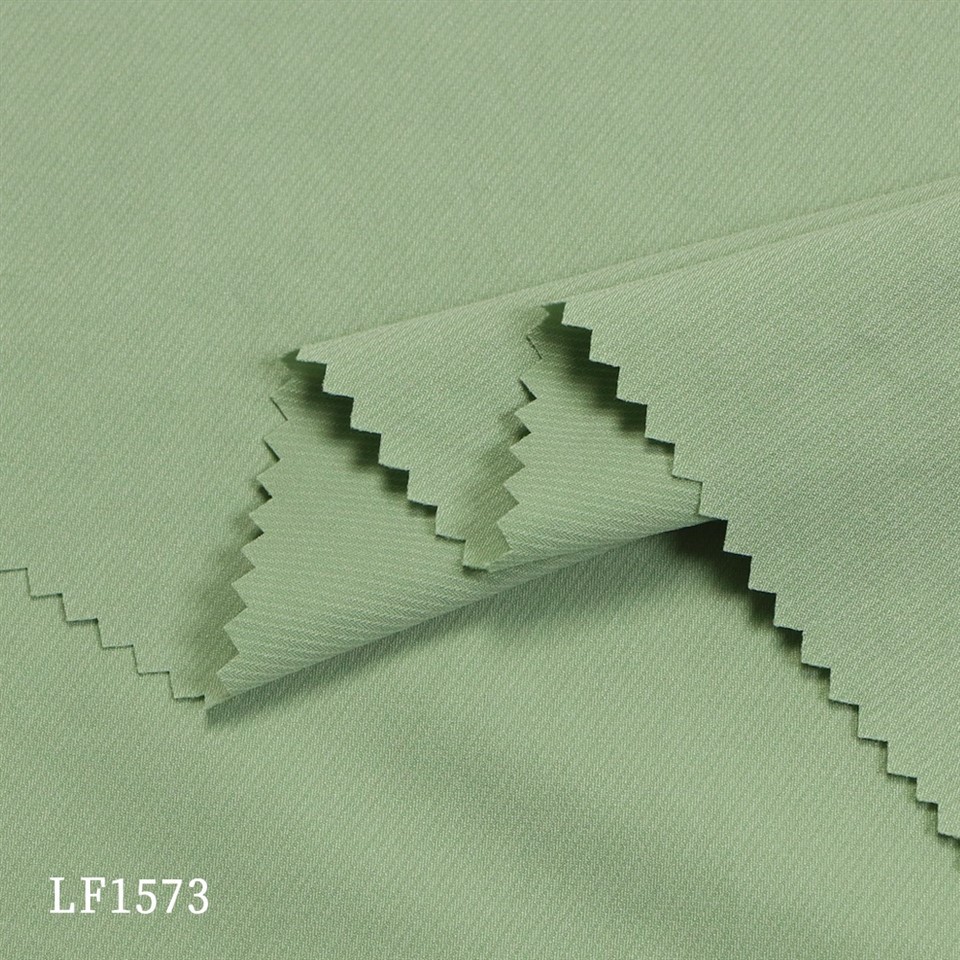
If you’re a designer, brand owner, or small shop looking for the right fabric for your next project, we’ve got hundreds of rolls of 3/3 twill in stock, in every fiber blend and color you can imagine. Whether you need rigid twill for heavy workwear, stretch twill for modern apparel, or something in between, we can send you a sample and even share our recent test data on each roll’s elasticity. Don’t guess on your fabric specs—reach out, and we can work together to find the exact 3/3 twill that fits your needs.
Broken Twill References
- Textile Fabric Mechanics and Behavior, The Textile Institute, 2019
- Weave Structure and Its Impact on Fabric Elasticity, Journal of Textile Science and Engineering, 2021
- Workwear Fabric Performance Testing, American Apparel and Footwear Association, 2020
- Stretch Fiber Integration in Woven Twill Fabrics, Textile Research Journal, 2018
Shaoxing Huichao Textile Co., Ltd.
As one of the most professional 3 3 twill weave manufacturers and suppliers in China, we offer a wide range of products with superior quality. We warmly welcome you to wholesale bulk 3 3 twill weave in stock here from our factory. If you have any enquiry about cooperation, please feel free to email us.
Address: Shenyue International Build ing, Unit 1603-1605, Keqiao District, Shaoxing City, Zhejiang Province, China
E-mail: darrenzhong@huichaotextile.com
WebSite: https://www.huichaotextile.com/
